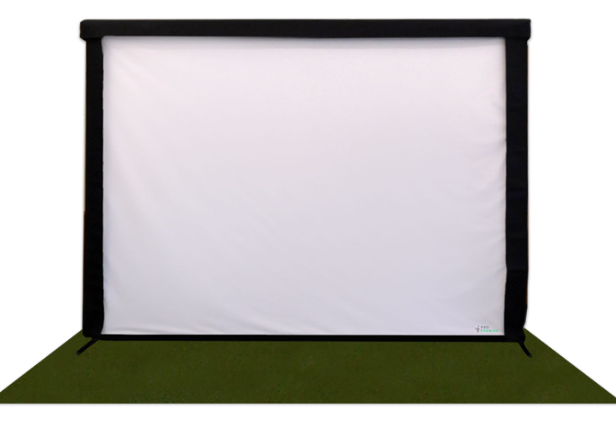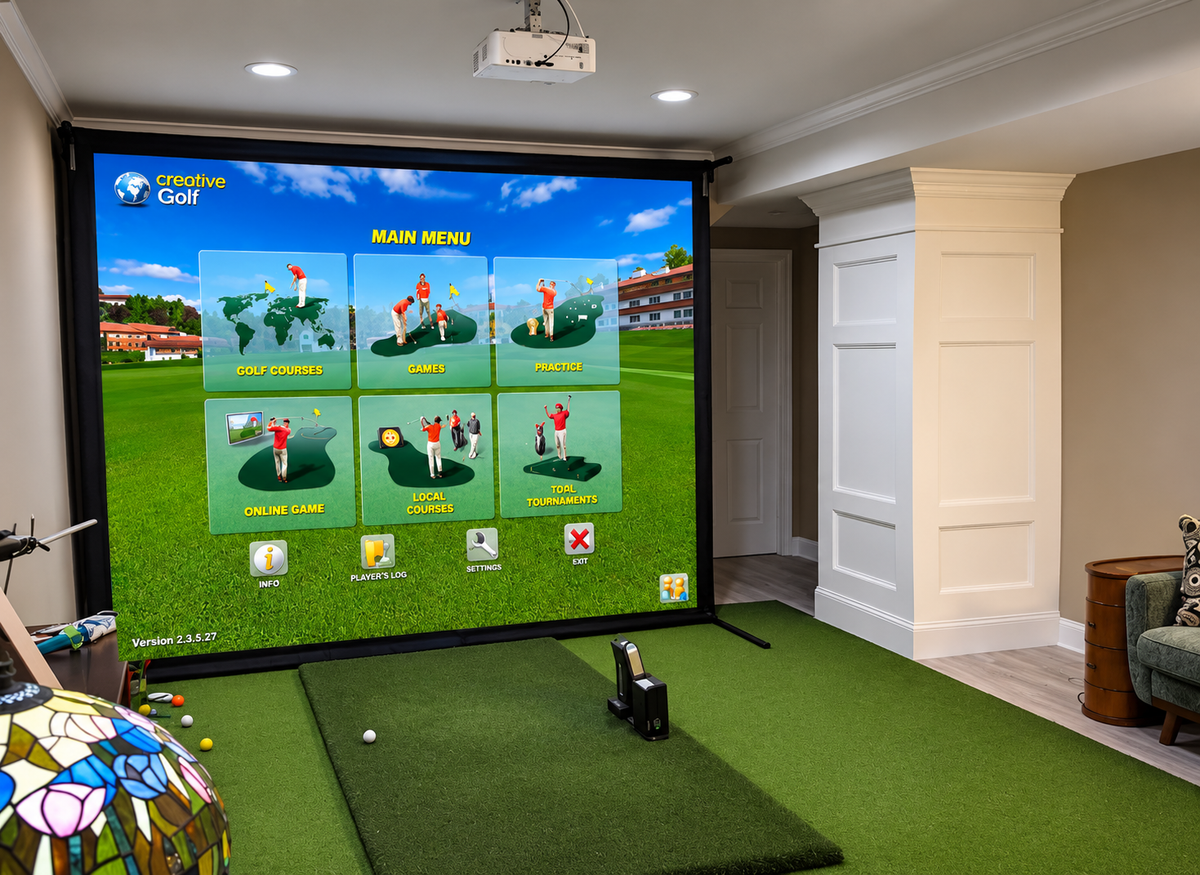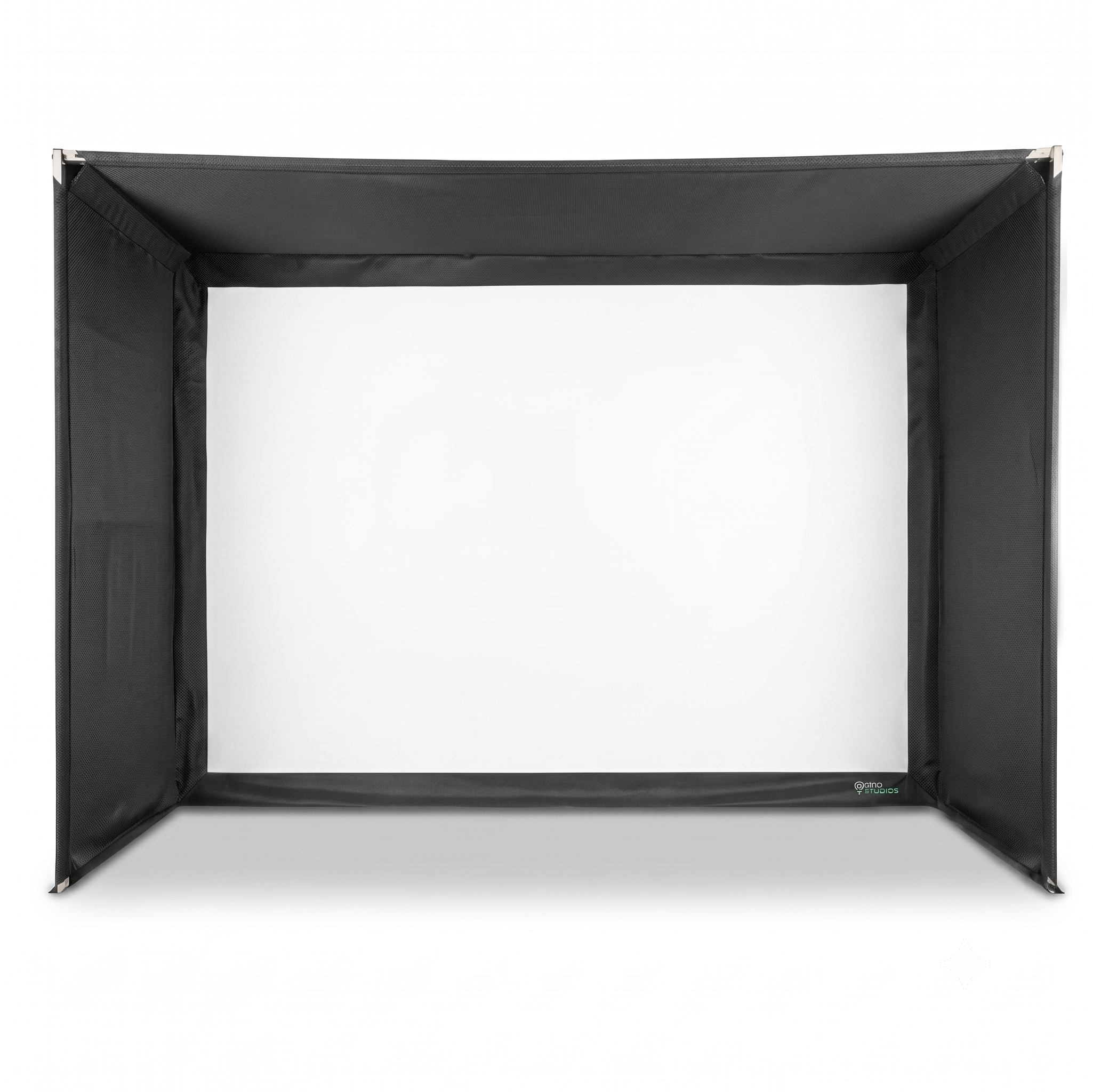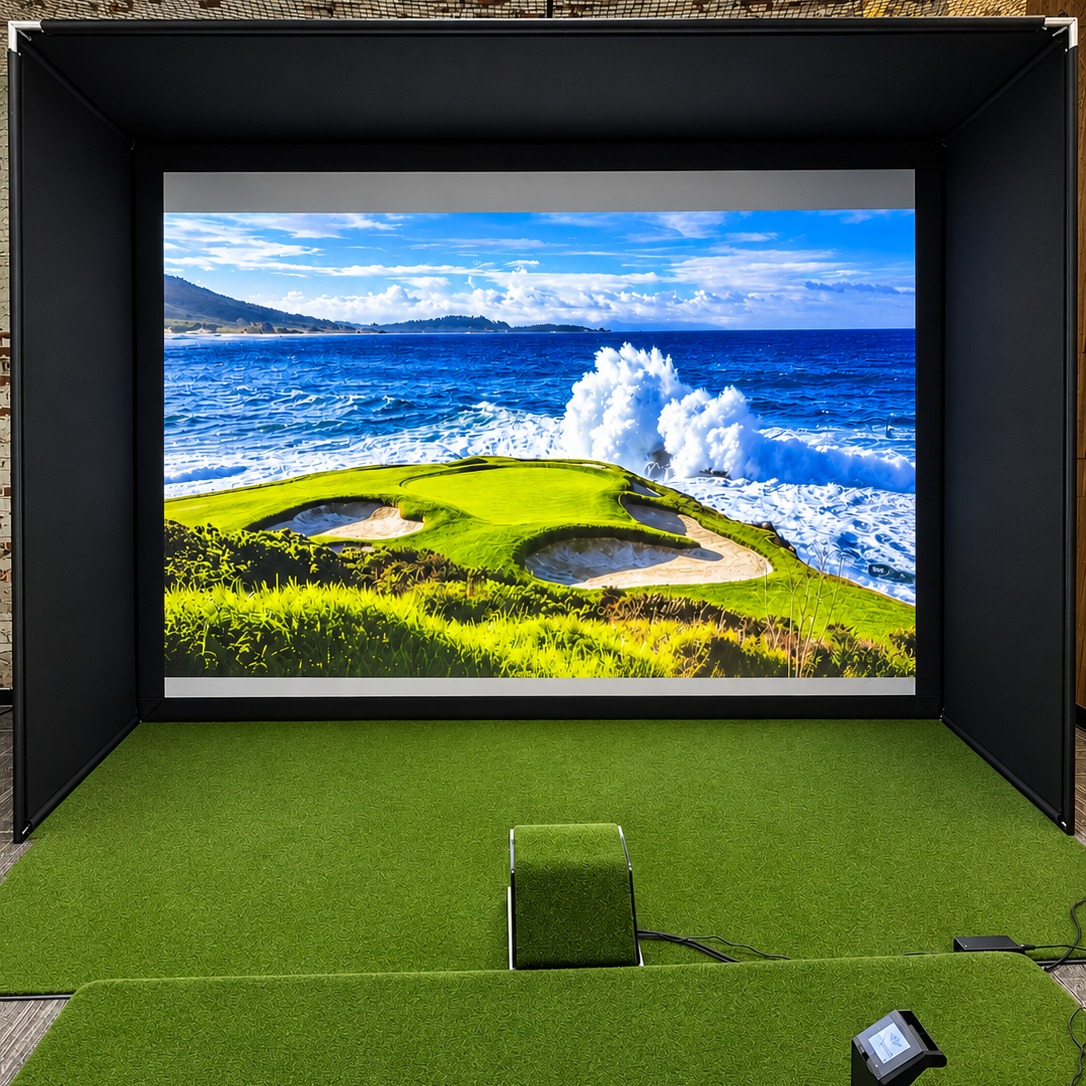



Complete, precision-matched golf simulator flooring engineered to sit flush out of the box. Tailored even for low-ceiling garages and tight spaces, our turnkey systems integrate a shock-absorbing subfloor, commercial turf flooring, and a dedicated hitting area. Eliminate uneven seams and get your entire floor in a single stop with a single click - so all you have to worry about is swinging straight.
Not sure of your exact measurements or room layout? Give us a call at (402) 577-0167 or email sales@turnkeyprostudios.com and we’ll help you dial in the right fit.

Golf Simulator Flooring Systems FAQs
Yes - adding an interlocking EVA foam subfloor layer acts as a thermal break between freezing winter concrete and your feet, making cold-weather sessions dramatically more comfortable. High-density closed-cell foam and commercial simulator turf also resist moisture, won't warp in temperature swings, and stay flat without curling at the edges.
Hitting directly on thin turf over concrete transfers shock straight into your wrists, elbows, and shoulders - especially if you take a divot. Pairing high-density interlocking EVA foam subfloor tiles beneath your turf and using a yielding gel or bristle-style hitting strip absorbs impact and allows the clubhead to travel through the ball naturally without grabbing or bouncing.
A full-room turf floor with a drop-in hitting strip gives you a cleaner, built-in studio look and costs significantly less over time than buying a premium standalone mat and trying to patch cheap turf around it. Standalone mats create awkward seams, uneven stance heights, and force you to replace the entire mat when the hitting zone wears down. With a modular flooring system, you get wall-to-wall turf for your stance and putting, paired with a replaceable hitting strip that swaps out in seconds whenever it wears out.
Matching your subfloor and turf thickness to your hitting strip is the single most important detail in a simulator build - if the strip sits even ¼" too high or too low, every shot becomes an uneven lie. When piecing together foam tiles, turf, and strips from different retailers, tolerances rarely line up. Our flooring systems are engineered with pre-matched subfloor and turf thicknesses so your hitting strip drops in completely flush with your stance area right out of the box.
Most complete subfloor-plus-turf systems add between 1.5" and 2.25" of total height off your concrete slab. If you are working with 8'6" to 9' ceilings, choosing a low-profile 1.5" to 1.75" total build height preserves critical driver swing clearance while still giving you enough subfloor depth to flush-mount a shock-absorbing hitting strip.
You can when you separate your putting surface from your strike zone. Standard thick tee-line turf grabs golf balls and rolls too slowly for realistic putting, while true putting turf gets damaged if you take full iron divots off it. Using commercial putting-grade turf across the room for true green speed - combined with a dedicated cut-out hitting strip for full swings - gives you realistic ball roll and authentic iron interaction in one seamless floor.
No. Most home and garage builders use interlocking EVA foam base tiles secured at the perimeter with double-sided carpet tape, then lay the turf roll over top with carpet tape along the edges and hitting-strip cutout. That keeps the floor completely flat and shift-free during aggressive swings while allowing you to lift a section, adjust cables, or replace a worn hitting strip in minutes without damaging your concrete.
Sourcing components from three different suppliers usually leads to mismatched thicknesses, multiple freight shipping charges, and wasted hours cutting down foam layers to level your stance. Our complete flooring packages bundle precision-matched subfloor tiles, commercial simulator turf, and replaceable divot strips into a single coordinated shipment - so every layer fits flush on day one.
Place the top three questions directly above the fold or right beneath your collection grid, as height clearance, flush leveling, and the full-room vs. mat debate are the exact friction points that cause DIY builders to stall before checkout.
Frecuently added together